
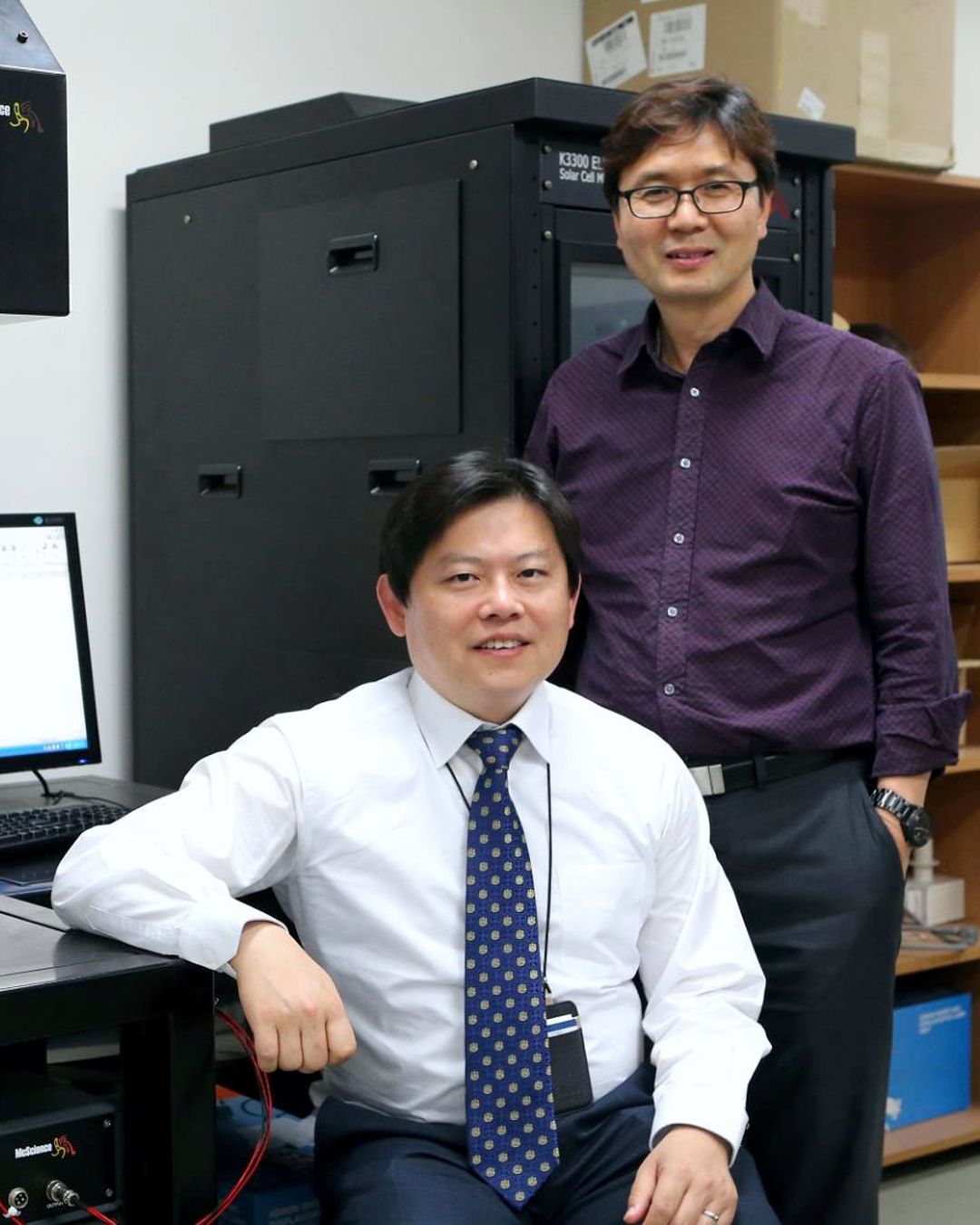
One day we may forget what "recharging" means. Not because the devices will last longer, but because they may never run out of power. It is not science fiction, but a concrete hypothesis that emerges from South Korea, where a team led by Professor Su Il In has presented a new prototype of a Carbon 14 battery: a small concentrate of energy capable of operating for decades, without any need for recharging.
The silent promise of Carbon 14 batteries
These batteries, also called Nuclear Diamond Batteries (NDBs), do not work like the traditional batteries we find in our smartphones or electric vehicles. They do not contain liquid electrolytes, nor do they rely on slow, degrading chemical reactions. Their secret lies in the radioactive decay of an isotope: Carbon 14, an unstable low-energy element, contained in the irradiated materials of nuclear reactors.
The technological heart of these batteries is synthetic diamonds. Carbon 14, encapsulated in layers of artificial diamond, acts simultaneously as a radioactive source and semiconductor, converting the emitted beta particles into electricity. It is a silent, constant, and incredibly long-lasting process: the half-life of Carbon 14 is over 5,700 years. This means that, in theory, such a battery could power a microdevice for decades – if not centuries – without ever shutting down.
A search that comes from afar
The new prototype, developed at the Daegu Gyeongbuk Institute of Science & Technology (DGIST), was presented in 2025 during the meeting of the American Chemical Society, receiving widespread recognition for the originality and potential of the discovery. Professor Su Il In's work significantly improved the efficiency of previous beta voltaic batteries, from 0.48% to 2.86%.
To achieve this, the team used radiocarbon in both electrodes – anode and cathode – and supplemented a sensitized titanium dioxide with a ruthenium dye, treated with citric acid. This treatment generated a cascading phenomenon known as "electronic avalanche", which multiplied current production. A brilliant demonstration of how the chemistry of materials can meet nuclear energy in surprisingly safe and compact ways.
An autonomy that redefines the very concept of "energy"
The applications of this technology are not designed for large energy consumption. But it is precisely in the micro-power supply that these batteries reveal their extraordinary potential. Environmental sensors placed in inaccessible places, microchips in satellites, biomedical devices such as pacemakers: whenever charging is impossible or dangerous, NDBs could be the ideal solution.
Not only that: the approach is also sustainable. Carbon 14 can be recovered from irradiated graphite, i.e. waste from nuclear reactors. In a future that wants to be circular, even radioactive waste can find new life as a clean, continuous, and reliable source of energy.
Limits still to be overcome
Like any emerging technology, Carbon 14 batteries also bring challenges. Efficiency is still relatively low compared to conventional battery chemistries. The power output is minimal: enough to power sensors or microdevices, but not to support electric vehicles or laptops. In addition, the management of radioactive materials requires strict regulations, with production and disposal costs still high.
But the researchers did not stop. A hybrid variant, recently developed by the Korean team, introduced isotope electrodes integrated with perovskite: an advanced material that increased electronic mobility by more than 56,000 times, ensuring stable operation for hours. A small step towards optimization, but a great sign of vitality for the sector.
A future that does not run out of power
Think of a world where batteries last as long as the entire life cycle of the device they power. Where environmental sensors remain operational for decades, even in the most hostile places. Where medical devices do not need surgery to change a battery. And where, perhaps one day, electric mobility will be able to rely not on an electrical outlet, but on a permanent and autonomous source of energy.
Carbon 14 batteries today represent a fascinating vision, still far from the general public but full of promise. If the current limits are exceeded, they could rewrite the rules of energy, sustainability, and technology.
A small diamond that, without ever shining, could illuminate the future.
Sources and further information
- "A safe nuclear battery that could last a lifetime" – ACS Spring 2025 official release, American Chemical Society. Link
- "World's first nextgeneration perovskite beta voltaic cell developed" – EurekAlert/DGIST. Link
- DGIST press release: development of dualsite beta voltaic cells with low cost and high efficiency. Link
- E-BIKE TRANSFORMATION
- HISTORY OF CIAO PIAGGIO
- EVENTS
- ASSEMBLY OF KITS PURCHASED ONLINE
- OUR AUTHORIZED WORKSHOPS
- MAINTENANCE OF E-BIKES AMBRA ITALIA
- ELECTRIC MICRO-MOBILITY
- SCHOOL PROJECT: INNOVATING WITH AMBRA ITALIA
- ELEGANT AND SUSTAINABLE MOBILITY FOR RECEPTION STRUCTURES
- THE WORLD THROUGH CIAO: OUR CUSTOMERS' STORIES
- RESEARCH AND INNOVATION
- BEHIND THE SCENES OF AMBRA ITALIA
- Differences between Ciao SC and PX series frames and impact on transformation
- The people of Ciao
- Ciao endothermic vs Ciao transformed into an e-bike: analysis of operating costs
- How to read and correctly interpret the Operating Instructions
- Because Ciao is beautiful
- Ciao Piaggio and women: a bond to tell
- Interview with a technician: what is it like to work on an electric Ciao?
- The Silence of the Myth – Pedal-Powered Emotions with an Electric Ciao
- Comparative Analysis of Environmental Impact: Ciao Piaggio Endothermic vs Ciao transformed into an E-Bike
- Safety First: Checking the Safety Systems on Ciao Transformed into E-Bikes
- The Longevity of E-Bikes: How Ambra Italia Extends the Life Cycle of the Ciao Piaggio
- The role of Ciao Piaggio transformed into an e-bike in the challenges of contemporary mobility
- Urban Efficiency: How the Ciao Piaggio transformed into E-Bikes by Ambra Italia revolutionize city spaces with style
- Navigating the Regulations: Current and Future Legislation on Electric Micro Mobility
- Post-Transformation Personalization: Opportunities and Limitations
- Ciao Restoration: Options and Tips
- Comparison between the efficiency of an internal combustion engine and an electric engine in mobility
- Building Long-Lasting Customer Relationships: Strategies for Workshops
- Electric rebirth: the Ciao Piaggio in the era of micro mobility
- Ciao Piaggio in cinema and pop culture
- Electricity System Integration: Challenges and Solutions
- Document Writing Philosophy: Everything Under Control
- Micro-Electric Mobility vs. Long-Distance Electric Mobility: Analysis and Perspectives
- The technology behind the myth: mechanical innovations of the Ciao Piaggio
- Compliance with Regulations: Safety and Certifications
- Steps towards Authorization: How to Become an Authorized Ambra Italia Workshop
- Cleaning and Care of your Ciao transformed into an E-Bike: Tips for Aesthetic Maintenance
- The Operating Instructions and Other Documents for the Assembly and Control of the Processes
- Micro Mobility and Social Responsibility: How Companies Can Make a Difference
- From work to free time: the Ciao Piaggio as a symbol of freedom
- The Materials Used
- From Niche to Mainstream: The Evolution of the Electric Micro Mobility Market
- Joining the Ambra Italia Network: Advantages and Opportunities for New Workshops
- Tests on Critical Components: battery and motor system
- Competing icons
- The Ciao and the urban mobility revolution
- E-Bike or electric motorbike? The choice of the type of transformation determines the approval
- The Role of Electric Micro-Mobility in Reducing Urban Pollution
- Collaborating to Innovate: The Flow of Information between Headquarters and Workshops
- Optimize the battery life of your Ambra Italia e-bike
- Quality Controls on Materials
- Design evolution
- Structural Problems
- Security and Micro Mobility. Standards and Recommended Practices for Electric Driving
- The Emoving Days 2024
- The components of the kit: panoramic
- Excellence in the service: Ambra Italia quality standards
- Basic maintenance of the Ambra Italia-Bike: step by step Guide for Newfits
- Keep the original design
- The future is here
- Birth of an icon